 Add to Chrome
 Add to Firefox
 Add to Edge
Breast Cancer Histology Image Classification
Papers and Code
Breast Cancer Recurrence Risk Prediction Based on Multiple Instance Learning
Dec 21, 2025
Predicting breast cancer recurrence risk is a critical clinical challenge. This study investigates the potential of computational pathology to stratify patients using deep learning on routine Hematoxylin and Eosin (H&E) stained whole-slide images (WSIs). We developed and compared three Multiple Instance Learning (MIL) frameworks -- CLAM-SB, ABMIL, and ConvNeXt-MIL-XGBoost -- on an in-house dataset of 210 patient cases. The models were trained to predict 5-year recurrence risk, categorized into three tiers (low, medium, high), with ground truth labels established by the 21-gene Recurrence Score. Features were extracted using the UNI and CONCH pre-trained models. In a 5-fold cross-validation, the modified CLAM-SB model demonstrated the strongest performance, achieving a mean Area Under the Curve (AUC) of 0.836 and a classification accuracy of 76.2%. Our findings demonstrate the feasibility of using deep learning on standard histology slides for automated, genomics-correlated risk stratification, highlighting a promising pathway toward rapid and cost-effective clinical decision support.

BlurryScope: a cost-effective and compact scanning microscope for automated HER2 scoring using deep learning on blurry image data
Oct 23, 2024We developed a rapid scanning optical microscope, termed "BlurryScope", that leverages continuous image acquisition and deep learning to provide a cost-effective and compact solution for automated inspection and analysis of tissue sections. BlurryScope integrates specialized hardware with a neural network-based model to quickly process motion-blurred histological images and perform automated pathology classification. This device offers comparable speed to commercial digital pathology scanners, but at a significantly lower price point and smaller size/weight, making it ideal for fast triaging in small clinics, as well as for resource-limited settings. To demonstrate the proof-of-concept of BlurryScope, we implemented automated classification of human epidermal growth factor receptor 2 (HER2) scores on immunohistochemically (IHC) stained breast tissue sections, achieving concordant results with those obtained from a high-end digital scanning microscope. We evaluated this approach by scanning HER2-stained tissue microarrays (TMAs) at a continuous speed of 5 mm/s, which introduces bidirectional motion blur artifacts. These compromised images were then used to train our network models. Using a test set of 284 unique patient cores, we achieved blind testing accuracies of 79.3% and 89.7% for 4-class (0, 1+, 2+, 3+) and 2-class (0/1+ , 2+/3+) HER2 score classification, respectively. BlurryScope automates the entire workflow, from image scanning to stitching and cropping of regions of interest, as well as HER2 score classification. We believe BlurryScope has the potential to enhance the current pathology infrastructure in resource-scarce environments, save diagnostician time and bolster cancer identification and classification across various clinical environments.
Deep Blur Multi-Model -- a strategy to mitigate the impact of image blur on deep learning model performance in histopathology image analysis
May 15, 2024AI-based analysis of histopathology whole slide images (WSIs) is central in computational pathology. However, image quality can impact model performance. Here, we investigate to what extent unsharp areas of WSIs impact deep convolutional neural network classification performance. We propose a multi-model approach, i.e. DeepBlurMM, to alleviate the impact of unsharp image areas and improve the model performance. DeepBlurMM uses the sigma cut-offs to determine the most suitable model for predicting tiles with various levels of blurring within a single WSI, where sigma is the standard deviation of the Gaussian distribution. Specifically, the cut-offs categorise the tiles into sharp or slight blur, moderate blur, and high blur. Each blur level has a corresponding model to be selected for tile-level predictions. Throughout the simulation study, we demonstrated the application of DeepBlurMM in a binary classification task for breast cancer Nottingham Histological Grade 1 vs 3. Performance, evaluated over 5-fold cross-validation, showed that DeepBlurMM outperformed the base model under moderate blur and mixed blur conditions. Unsharp image tiles (local blurriness) at prediction time reduced model performance. The proposed multi-model approach improved performance under some conditions, with the potential to improve quality in both research and clinical applications.
Learning a Clinically-Relevant Concept Bottleneck for Lesion Detection in Breast Ultrasound
Jun 29, 2024Detecting and classifying lesions in breast ultrasound images is a promising application of artificial intelligence (AI) for reducing the burden of cancer in regions with limited access to mammography. Such AI systems are more likely to be useful in a clinical setting if their predictions can be explained to a radiologist. This work proposes an explainable AI model that provides interpretable predictions using a standard lexicon from the American College of Radiology's Breast Imaging and Reporting Data System (BI-RADS). The model is a deep neural network featuring a concept bottleneck layer in which known BI-RADS features are predicted before making a final cancer classification. This enables radiologists to easily review the predictions of the AI system and potentially fix errors in real time by modifying the concept predictions. In experiments, a model is developed on 8,854 images from 994 women with expert annotations and histological cancer labels. The model outperforms state-of-the-art lesion detection frameworks with 48.9 average precision on the held-out testing set, and for cancer classification, concept intervention is shown to increase performance from 0.876 to 0.885 area under the receiver operating characteristic curve. Training and evaluation code is available at https://github.com/hawaii-ai/bus-cbm.
WEEP: A method for spatial interpretation of weakly supervised CNN models in computational pathology
Apr 08, 2024Deep learning enables the modelling of high-resolution histopathology whole-slide images (WSI). Weakly supervised learning of tile-level data is typically applied for tasks where labels only exist on the patient or WSI level (e.g. patient outcomes or histological grading). In this context, there is a need for improved spatial interpretability of predictions from such models. We propose a novel method, Wsi rEgion sElection aPproach (WEEP), for model interpretation. It provides a principled yet straightforward way to establish the spatial area of WSI required for assigning a particular prediction label. We demonstrate WEEP on a binary classification task in the area of breast cancer computational pathology. WEEP is easy to implement, is directly connected to the model-based decision process, and offers information relevant to both research and diagnostic applications.
Exploring Regions of Interest: Visualizing Histological Image Classification for Breast Cancer using Deep Learning
May 31, 2023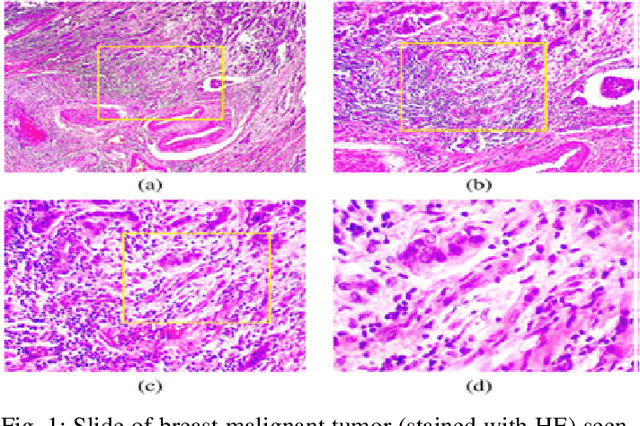
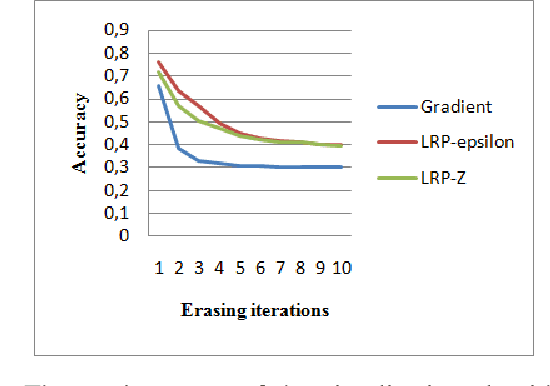
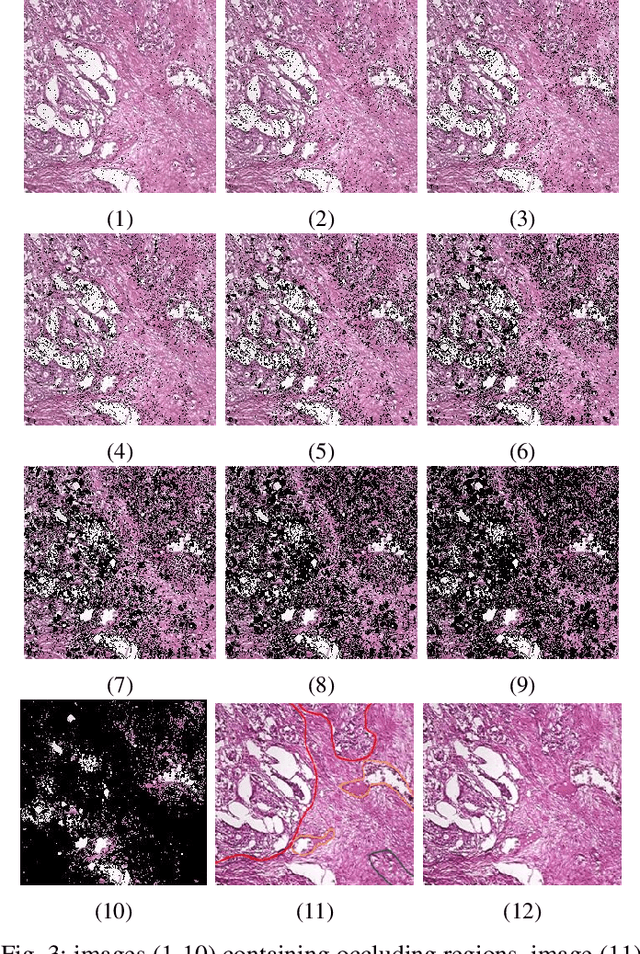
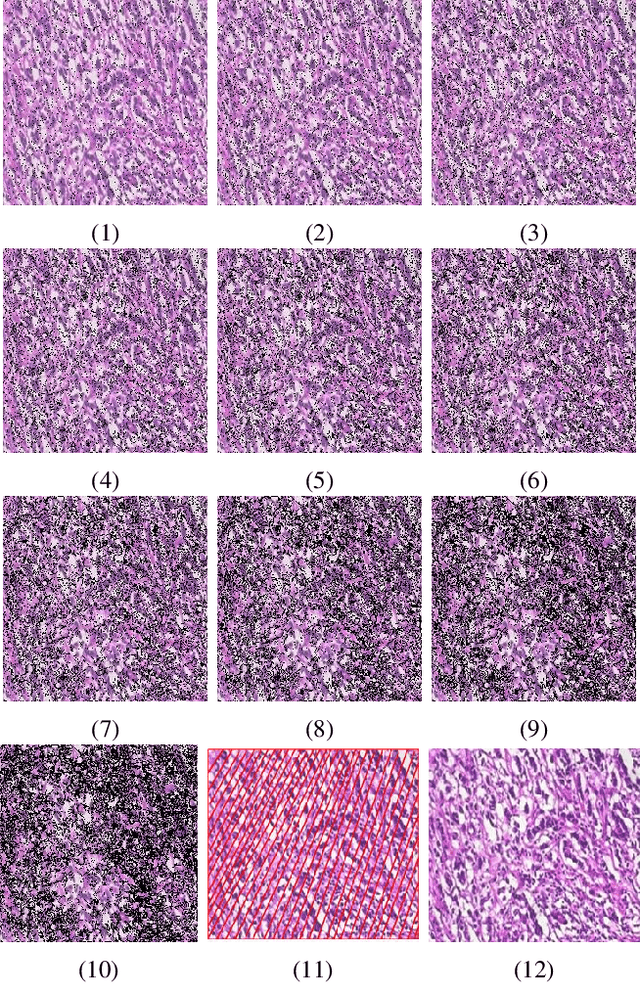
Computer aided detection and diagnosis systems based on deep learning have shown promising performance in breast cancer detection. However, there are cases where the obtained results lack justification. In this study, our objective is to highlight the regions of interest used by a convolutional neural network (CNN) for classifying histological images as benign or malignant. We compare these regions with the regions identified by pathologists. To achieve this, we employed the VGG19 architecture and tested three visualization methods: Gradient, LRP Z, and LRP Epsilon. Additionally, we experimented with three pixel selection methods: Bins, K-means, and MeanShift. Based on the results obtained, the Gradient visualization method and the MeanShift selection method yielded satisfactory outcomes for visualizing the images.
Source-Free Domain Adaptation of Weakly-Supervised Object Localization Models for Histology
Apr 29, 2024Given the emergence of deep learning, digital pathology has gained popularity for cancer diagnosis based on histology images. Deep weakly supervised object localization (WSOL) models can be trained to classify histology images according to cancer grade and identify regions of interest (ROIs) for interpretation, using inexpensive global image-class annotations. A WSOL model initially trained on some labeled source image data can be adapted using unlabeled target data in cases of significant domain shifts caused by variations in staining, scanners, and cancer type. In this paper, we focus on source-free (unsupervised) domain adaptation (SFDA), a challenging problem where a pre-trained source model is adapted to a new target domain without using any source domain data for privacy and efficiency reasons. SFDA of WSOL models raises several challenges in histology, most notably because they are not intended to adapt for both classification and localization tasks. In this paper, 4 state-of-the-art SFDA methods, each one representative of a main SFDA family, are compared for WSOL in terms of classification and localization accuracy. They are the SFDA-Distribution Estimation, Source HypOthesis Transfer, Cross-Domain Contrastive Learning, and Adaptively Domain Statistics Alignment. Experimental results on the challenging Glas (smaller, breast cancer) and Camelyon16 (larger, colon cancer) histology datasets indicate that these SFDA methods typically perform poorly for localization after adaptation when optimized for classification.
Improved Breast Cancer Diagnosis through Transfer Learning on Hematoxylin and Eosin Stained Histology Images
Sep 15, 2023

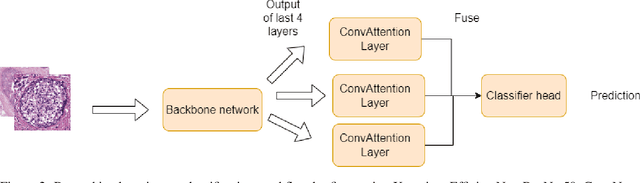
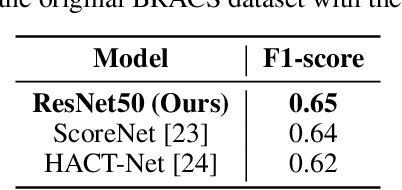
Breast cancer is one of the leading causes of death for women worldwide. Early screening is essential for early identification, but the chance of survival declines as the cancer progresses into advanced stages. For this study, the most recent BRACS dataset of histological (H\&E) stained images was used to classify breast cancer tumours, which contains both the whole-slide images (WSI) and region-of-interest (ROI) images, however, for our study we have considered ROI images. We have experimented using different pre-trained deep learning models, such as Xception, EfficientNet, ResNet50, and InceptionResNet, pre-trained on the ImageNet weights. We pre-processed the BRACS ROI along with image augmentation, upsampling, and dataset split strategies. For the default dataset split, the best results were obtained by ResNet50 achieving 66\% f1-score. For the custom dataset split, the best results were obtained by performing upsampling and image augmentation which results in 96.2\% f1-score. Our second approach also reduced the number of false positive and false negative classifications to less than 3\% for each class. We believe that our study significantly impacts the early diagnosis and identification of breast cancer tumors and their subtypes, especially atypical and malignant tumors, thus improving patient outcomes and reducing patient mortality rates. Overall, this study has primarily focused on identifying seven (7) breast cancer tumor subtypes, and we believe that the experimental models can be fine-tuned further to generalize over previous breast cancer histology datasets as well.
A Preliminary Investigation into Search and Matching for Tumour Discrimination in WHO Breast Taxonomy Using Deep Networks
Aug 22, 2023Breast cancer is one of the most common cancers affecting women worldwide. They include a group of malignant neoplasms with a variety of biological, clinical, and histopathological characteristics. There are more than 35 different histological forms of breast lesions that can be classified and diagnosed histologically according to cell morphology, growth, and architecture patterns. Recently, deep learning, in the field of artificial intelligence, has drawn a lot of attention for the computerized representation of medical images. Searchable digital atlases can provide pathologists with patch matching tools allowing them to search among evidently diagnosed and treated archival cases, a technology that may be regarded as computational second opinion. In this study, we indexed and analyzed the WHO breast taxonomy (Classification of Tumours 5th Ed.) spanning 35 tumour types. We visualized all tumour types using deep features extracted from a state-of-the-art deep learning model, pre-trained on millions of diagnostic histopathology images from the TCGA repository. Furthermore, we test the concept of a digital "atlas" as a reference for search and matching with rare test cases. The patch similarity search within the WHO breast taxonomy data reached over 88% accuracy when validating through "majority vote" and more than 91% accuracy when validating using top-n tumour types. These results show for the first time that complex relationships among common and rare breast lesions can be investigated using an indexed digital archive.
Stain-invariant self supervised learning for histopathology image analysis
Nov 14, 2022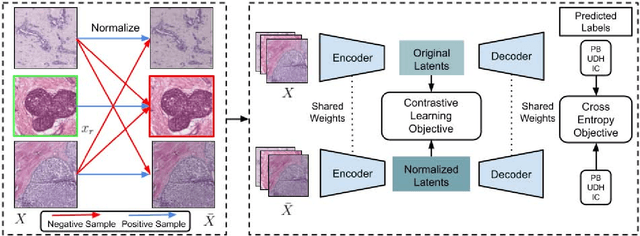
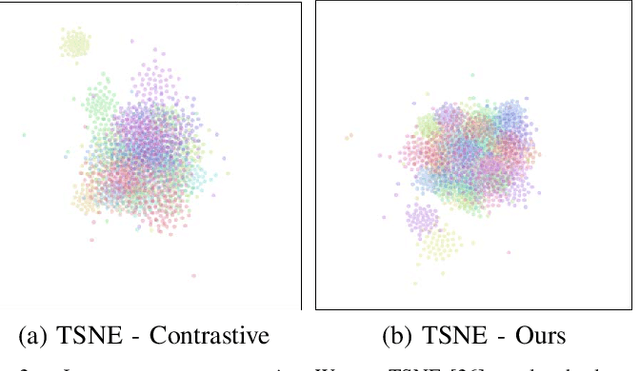
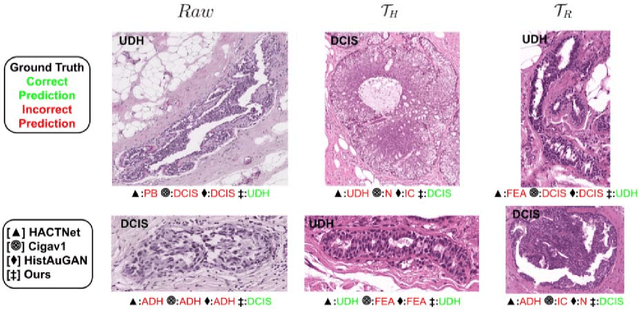
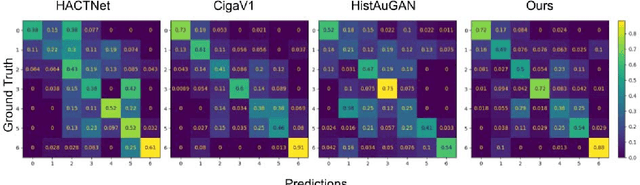
We present a self-supervised algorithm for several classification tasks within hematoxylin and eosin (H&E) stained images of breast cancer. Our method is robust to stain variations inherent to the histology images acquisition process, which has limited the applicability of automated analysis tools. We address this problem by imposing constraints a learnt latent space which leverages stain normalization techniques during training. At every iteration, we select an image as a normalization target and generate a version of every image in the batch normalized to that target. We minimize the distance between the embeddings that correspond to the same image under different staining variations while maximizing the distance between other samples. We show that our method not only improves robustness to stain variations across multi-center data, but also classification performance through extensive experiments on various normalization targets and methods. Our method achieves the state-of-the-art performance on several publicly available breast cancer datasets ranging from tumor classification (CAMELYON17) and subtyping (BRACS) to HER2 status classification and treatment response prediction.